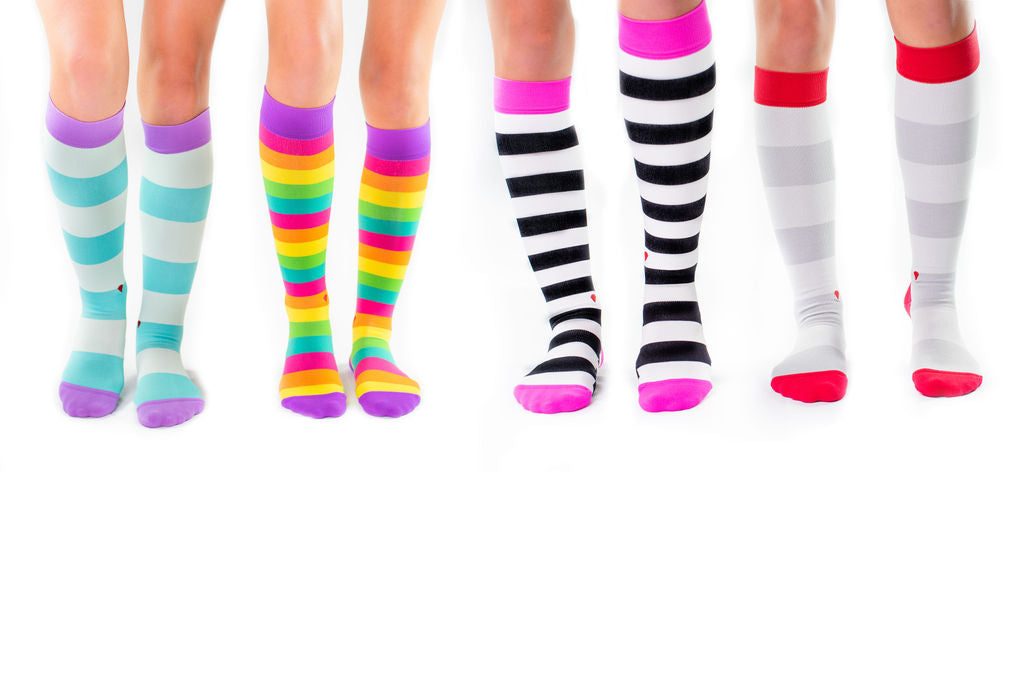


If you've ever shopped for socks online, you've probably come across two popular options: compression socks and grip socks. At first glance, they may seem similar—they're both designed to support movement and comfort—but they actually serve very different purposes.
So, how do you know which pair belongs in your drawer?
Let's break it down.
What Are Compression Socks?
Compression socks are specially designed to apply gentle, graduated pressure to your legs and feet. The compression is strongest around the ankle and gradually decreases as it moves up the leg.
This design helps encourage healthy circulation by assisting your veins in moving blood back toward your heart.
Compression socks are commonly worn by:
-
Nurses and healthcare professionals
-
Travelers on long flights or road trips
-
Pregnant women
-
Retail and hospitality workers
-
Teachers
-
Office workers who sit for long periods
-
Athletes during recovery
-
Anyone who spends hours on their feet
Benefits of compression socks include:
-
Reduced leg fatigue
-
Less swelling in the feet and ankles
-
Improved circulation
-
Extra support during long workdays
-
Increased comfort while traveling
-
Faster recovery after exercise
Many people describe putting on compression socks as giving their legs a gentle, supportive hug that lasts all day.
What Are Grip Socks?
Grip socks are designed with one simple goal: keep you from slipping.
Small rubber grips on the bottom of the sock create traction between your feet and the floor, helping improve stability and confidence during movement.
Unlike compression socks, grip socks typically don't apply graduated pressure. Their primary purpose is to improve footing and control.
Grip socks are popular for:
-
Pilates
-
Yoga
-
Barre
-
Dance
-
Home workouts
-
Physical therapy
-
Walking on hardwood or tile floors
They help reduce slipping while allowing your feet to move naturally throughout your workout.
Compression vs. Grip Socks: Side-by-Side
| Compression Socks | Grip Socks |
|---|---|
| Improve circulation | Improve traction |
| Reduce swelling and fatigue | Reduce slipping |
| Graduated compression | Rubber grips on the sole |
| Great for work, travel, recovery | Great for studio workouts and home exercise |
| Support your legs | Support your footing |
Think of it this way:
Compression socks help what's happening inside your legs.
Grip socks help what's happening underneath your feet.
Different jobs. Different superpowers.
Can You Wear Both?
Absolutely.
In fact, many active women keep both styles in their wardrobe because they solve different problems.
Imagine this day:
You work a 12-hour hospital shift in compression socks to help reduce fatigue and swelling.
After work, you head to Pilates and swap into grip socks for better stability on the reformer.
Same person.
Different activity.
Different sock.
Which Socks Are Right for You?
Choose compression socks if you:
-
Stand all day
-
Sit for long periods
-
Travel frequently
-
Experience tired or achy legs
-
Notice swelling in your feet or ankles
-
Want extra support during recovery
Choose grip socks if you:
-
Practice Pilates
-
Love yoga or barre
-
Exercise on smooth studio floors
-
Want better traction at home
-
Need extra confidence while balancing or stretching
If both descriptions sound like you...
You probably need both.
Do You Ever Need Grip and Compression Together?
Some specialty socks combine light compression with grip soles, but most are designed to prioritize one feature over the other.
That's because each sock is engineered for a different purpose.
Compression is carefully measured to support circulation.
Grip is strategically placed to maximize traction.
Rather than asking which sock is "better," it's more helpful to ask:
What am I doing today?
Your activities should determine what's on your feet.
The Bottom Line
The best socks aren't the ones with the most features—they're the ones designed for the job you're asking them to do.
Compression socks help keep your legs feeling energized through long days, travel, and recovery.
Grip socks help keep you stable during movement, workouts, and everyday activities on slippery surfaces.
Whether you're caring for patients, chasing toddlers, boarding a flight, flowing through a Pilates class, or simply tackling another busy day, having the right socks can make a bigger difference than you might expect.
At Ruby, we believe every woman deserves products that support the way she moves through life. Whether that means compression for long shifts or grip for your next studio session, the right pair of socks can help you feel more comfortable, more confident, and ready for whatever comes next.